
Trezor has integrated native stablecoin yield functionality into Trezor Suite, the hardware wallet provider’s desktop and mobile app, in a move that could make earning stablecoin yields more accessible to users who have traditionally avoided decentralized finance due to its complexity and security risks.
Announced on Thursday, the feature comes through integration with Morph, a decentralized lending protocol built on Ethereum. The integration allows users to deposit USDt (USDT) and USDC (USDC) into pre-selected Morpho vaults directly through Trezor Suite without connecting external wallets or using separate DeFi applications.
According to Trezor, deposits, withdrawals and reward requests are signed directly on users’ hardware wallets through the company’s clear signing interface, which displays transaction details in human-readable form on the device’s screen.
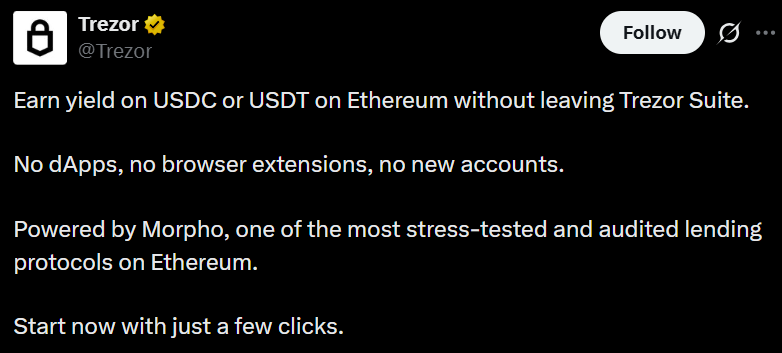
Source: Safe
At launch, Trezor selected two Morpho Treasuries curated by Steakhouse Financial — USDC Prime and USDT Prime. The company said returns are generated from borrowing demand on Morpho, not from token incentive programs.
Trezor is one of the largest providers of crypto hardware wallets and is widely considered the second largest player in the market behind Ledger.
Wallet service providers have recently made a big push to build decentralized finance functionality directly into custodial products while reducing the complexity traditionally associated with DeFi protocols.
Ledger already offers stablecoin native yield through Ledger Live using Kiln-powered integrations with protocols including Morpho, Aave and Compound.
Related: ERC-7943 Author Says Institutions Can’t Play DeFi’s ‘Pirate Game’
The yield of stablecoins is attracting increasing interest — and attention
Stablecoin yield strategies have become one of the fastest growing use cases in DeFi, allowing users to earn returns on dollar-pegged assets by lending them through the onchain protocol.
According to CoinMarketCap, USDC returns can vary widely depending on platforms and market conditions, with some protocols offering double-digit annual returns. Supporters say stablecoin yield products offer cryptocurrency holders a way to generate passive income.
However, the strategies also carry risks, including smart contract vulnerabilities, liquidity issues, and exposure to centralized stablecoin issuers or other counterparties.
Ethereum co-founder Vitalik Buterin recently drew a distinction between decentralized finance and the many yield-focused stablecoin products currently on the market. In a recent post, Buterin said many “USDC yield” strategies still rely heavily on centralized issuers while failing to adequately address counterparty risk.
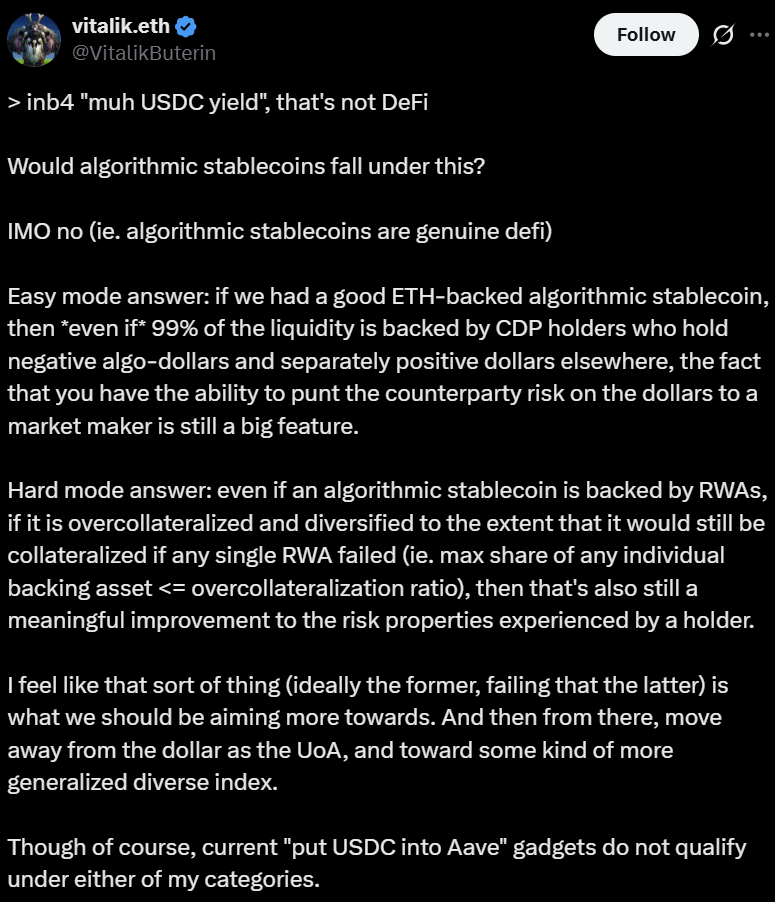
Source: Vitalik Buterin
Buterin proposed two alternative models that he said are more aligned with DeFi’s decentralized ethos: algorithmic Ether-backed stablecoins and real-world overcollateralized asset-backed stablecoins.
Related: Crypto Biz: Institutions tighten grip on Bitcoin, AI and prediction markets