
Retail bitcoin (BTC) activity on Binance has fallen to an all-time low. Retail BTC inflows on Binance are now averaging close to 314 BTC per month in 2026, sharply lower than the 1200 BTC range seen in March 2024.
Bitcoin’s May recovery also slowed as spot inflows weakened on Binance, with 30-day net demand growth falling 73% over the past three weeks.
Retail bitcoin traders backed off
CryptoQuant Analyst Darkfost he said retail Bitcoin inflows on Binance remained close to all-time lows. The metric tracks BTC deposits from wallets containing less than 1 BTC, which is a common signal for small investor activity.
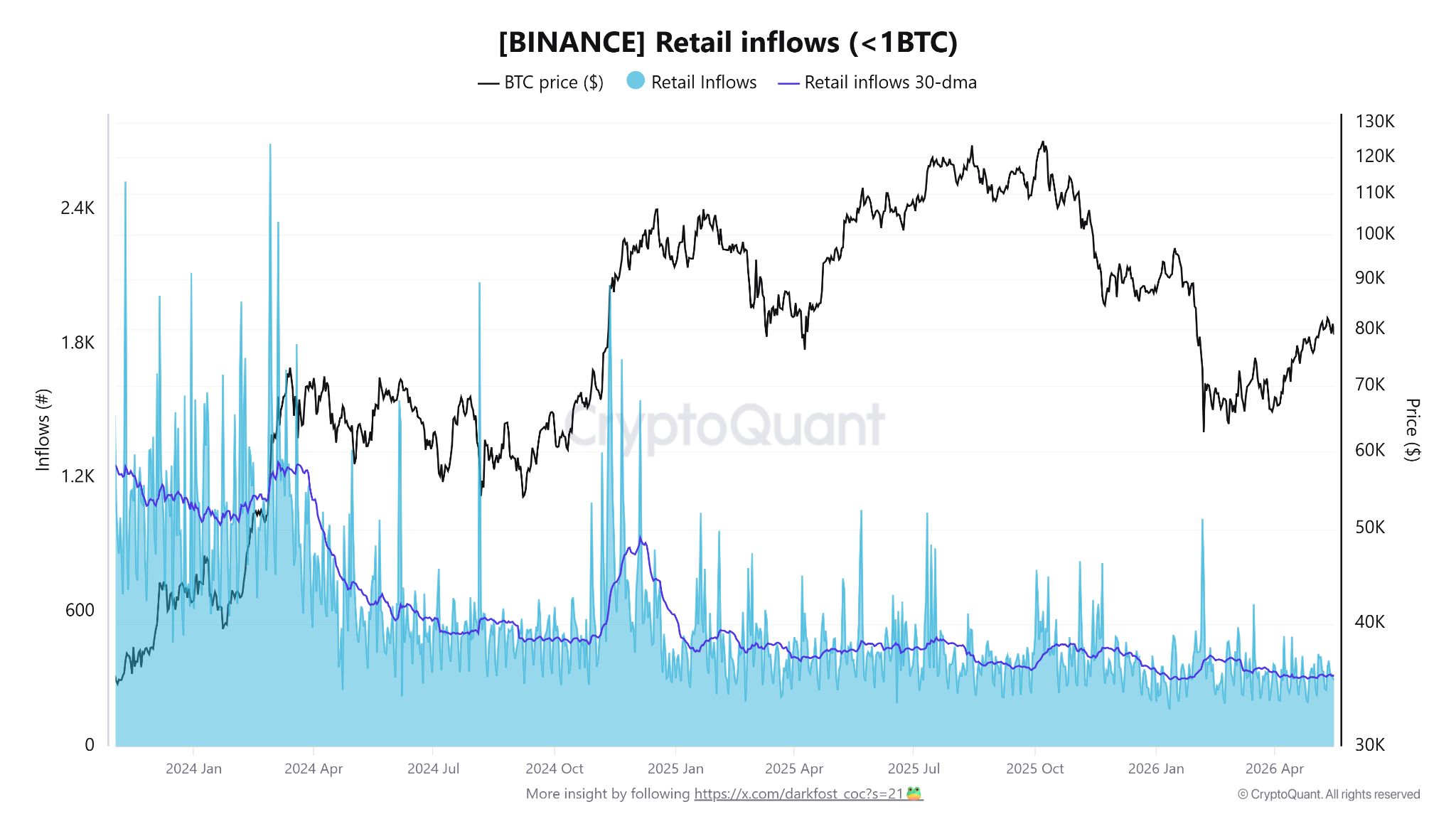
Retail Bitcoin Inflows (less than 1 BTC) on Binance. Source: CryptoQuant
The monthly retail BTC inflow to Binance now averages only 314 BTC. The figure was close to 1,800 BTC during the 2022 bear market and around 1,200 BTC during Bitcoin’s March 2024 local peak near $75,000. Earlier cycles have seen far greater retail participation, with inflows peaking at close to 5,400 BTC in 2018 and 2,600 BTC in 2021.
Darkfost said part of the shift likely stemmed from investors moving toward spot Bitcoin exchange-traded funds (ETFs), rather than directly holding BTC on exchanges.
CryptoQuant data as well showed slowing growth in retail demand. The 30-day change in retail demand fell to 3.12% from 7.39% last week. That earlier reading marked the strongest expansion in retail demand since August 2025, when Bitcoin traded near $115,000. The decline indicates weaker market participation after a short increase in purchasing activity.
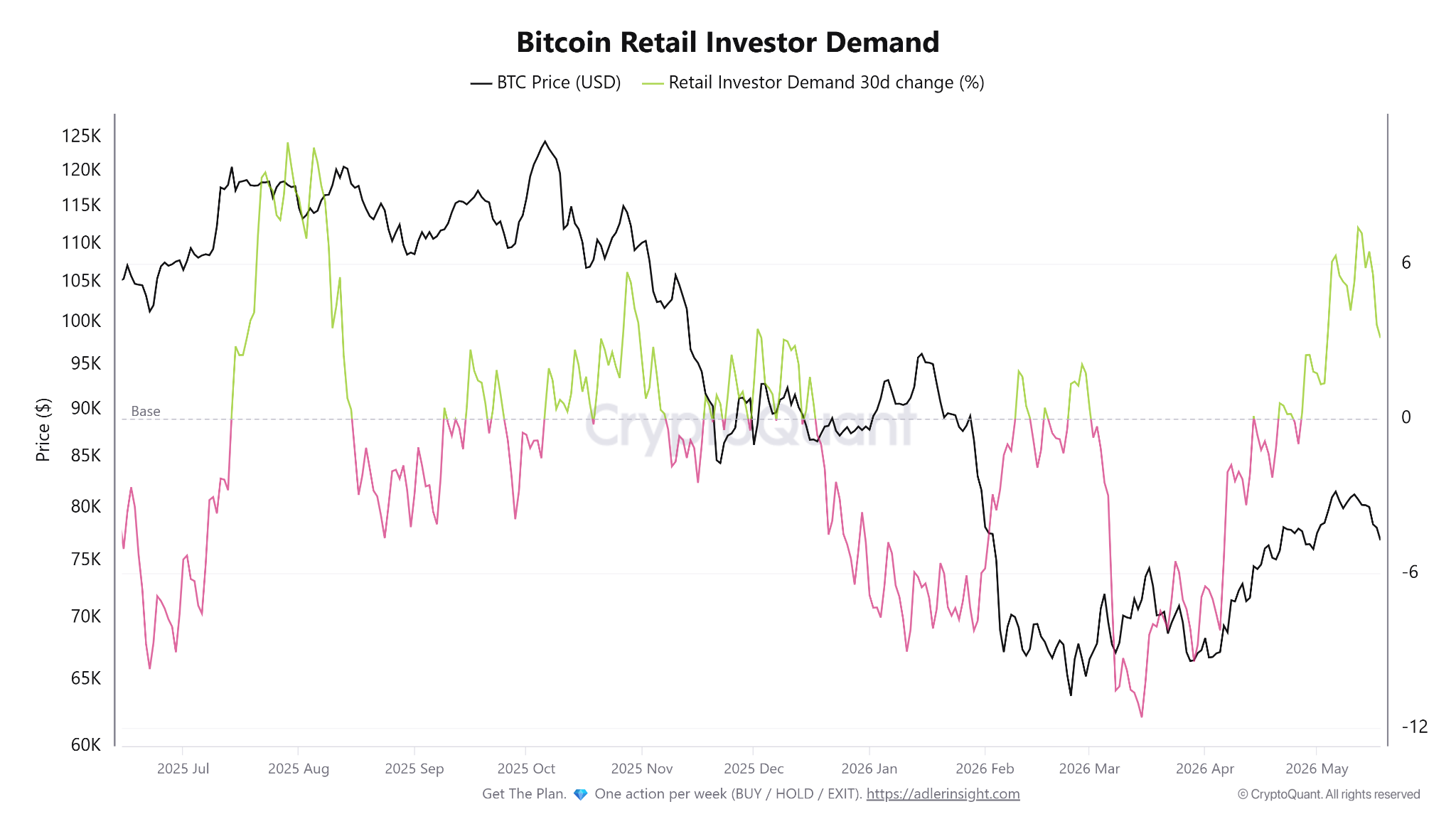
Small Investor Demand for Bitcoin. Source: CryptoQuant
Related: Bitcoin Price Hits $76K, Lowest Since April After $1B Net ETF Outflow
BTC spot demand lags futures positioning
Crypto analyst Amr Taha he said Binance has seen two major spikes in Bitcoin sales volume during the recent downturn. The first reached approximately $1.5 billion on May 15. The other climbed above $1.1 billion while Bitcoin fell below $77,000.
Market analyst Crazzyblockk said one important signal still missing for Bitcoin’s recovery is balanced spot demand. Previous increases in October 2024, November 2024 and May 2025 showed that spot and futures demand rose together. Spot demand ranged between +97,000 BTC and +190,000 BTC during those price increases, while futures demand expanded along with it.
The latest recovery showed a different pattern. BTC futures demand remained positive at +193,000 BTC for 30 days, while spot demand remained negative at -28,000 BTC and remained below zero for 65 consecutive days. The total 30-day growth in demand also fell from 232,000 BTC in early May to 62,000 BTC by May 16, marking a 73% drop.
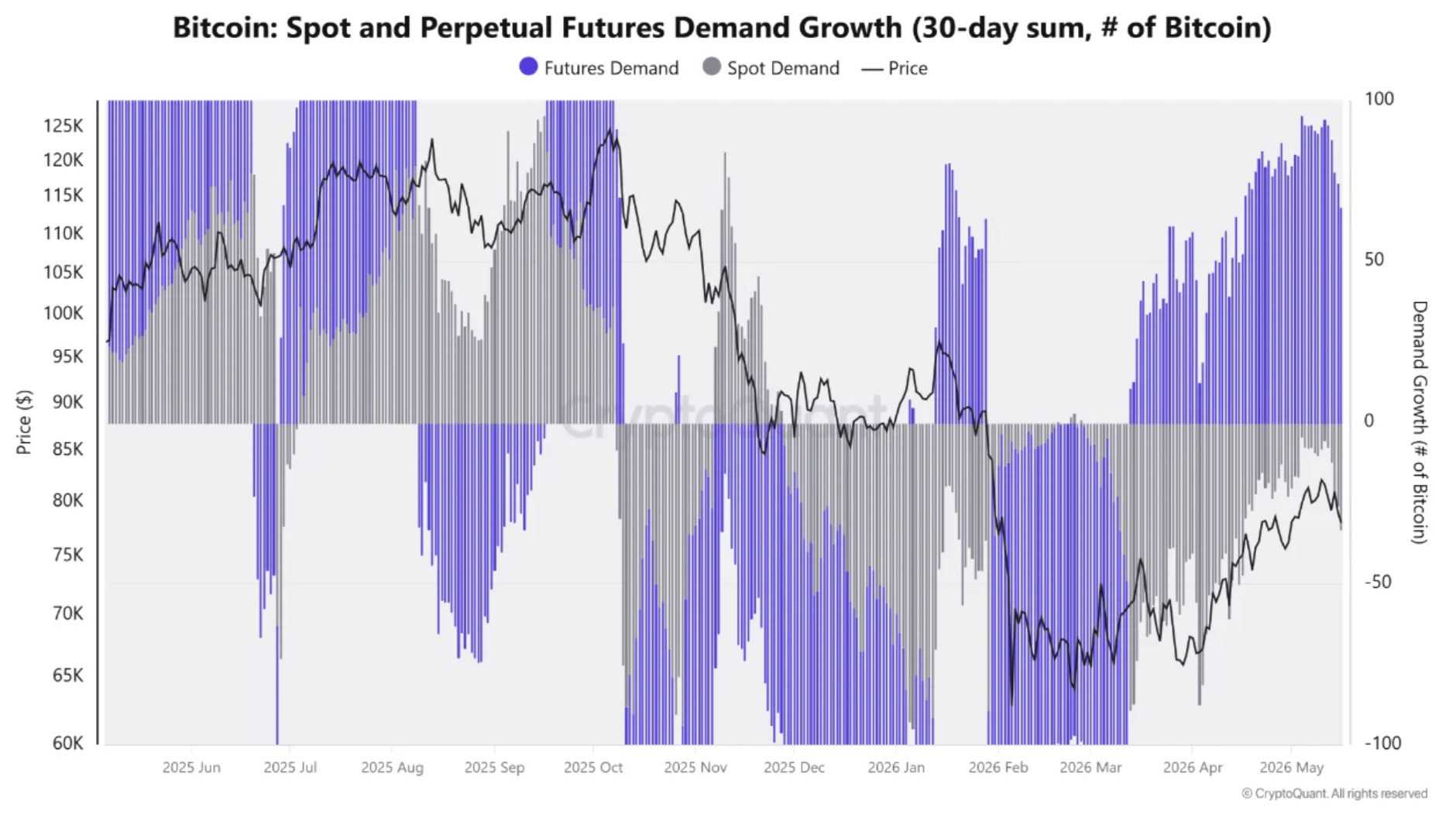
Demand growth for bitcoin spot and futures (30-day sum). Source: CryptoQuant
Crazyblockk too pointed to the sharp shift in Binance’s futures dominance last month. Binance previously controlled 40%-44% of global USDT margin futures volume from October 2024 to March 2026.
In May 2026, Binance’s share fell to 21.1%, while OKX rose to 26.3%, marking the first reversal of the exchange’s leadership during the cycle.
Related: 5/18 Price Predictions: SPX, DXY, BTC, ETH, XRP, BNB, SOL, DOGE, HYPE, ADA