
Digital asset regulation finally kicked into gear in 2025 when the US moved towards a more crypto-asset-friendly legal framework and the EU began fully implementing the Market Regulation of Crypto-Assets (MiCA) framework across Europe.
But crypto lawyers enter 2026 facing unresolved questions around prediction markets and super apps, taxes, privacy and digital market structure.
To understand how cryptocurrency law has developed in 2025 and envision what lies ahead, Magazine spoke with legal experts Catherine Smirnova and Yuriy Brisov of Digital & Analogue Partners in Europe, Joshua Chu of the Hong Kong Web3 Association and Charlyn Ho of Rikka in the US.
The discussion has been edited for clarity and length.
Magazine: What do you think was the most important legal development in cryptocurrency in 2025?
To: I would say that the most important legal developments were the full implementation of MiCA in the EU and the passing of the GENIUS Act and the progress of the CLARITY Act in the USA. The reason I am saying this is not so much just the specifics of those parts of the law, but the law now exists.
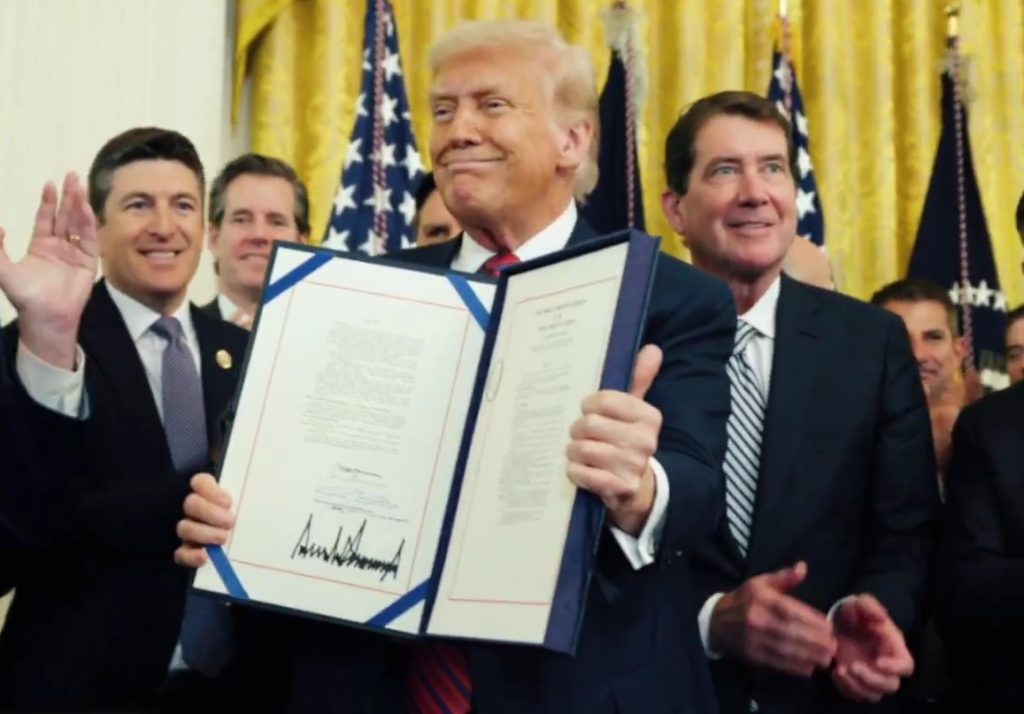
The crypto legal landscape has become clearer and we are moving towards a more defined regulatory framework.
An additional development would be the Trump administration executive order to crypto. Although not legislation, it had a real impact. It represents a US policy that aggressively promotes and expands crypto in the domestic market. Politics aside, this is a turning point. It is an official acknowledgment that cryptocurrency is here to stay and is an important part of the technology landscape. It moves cryptocurrency beyond the perception that it is merely a tool for illicit activity or frontier experimentation and recognizes it as a legitimate technology with broader implications beyond memecoins or speculative trading.
Read also
Features
Ukraine’s ‘Slaughterbot’ Drones, MechaHitler Becomes Sexy Tramp: AI Eye
Features
Can Bitcoin Survive the Network-Thumping Carrington Event?

Brišov: Another important development in American politics was Project Crypto announced by Paul Atkins. The US played a key role in the early blockchain revolution, but under previous SEC policies, many crypto startups left the country.
With the new administration under President Trump and Paul Atkins as chairman of the SEC, the situation has changed. We saw a clear reversal in 2025, with the return of startups to the US.
Magazine: What broader regulatory forces in 2025 will affect how governments approach digital assets?
Smirnova: Regulation of digital markets has become a geopolitical issue. In the EU, the trend started a few years ago continued, with the introduction and implementation of adapted regulation for digital markets. This includes gatekeeper investigations and the application of frameworks such as the Digital Markets Act.
The US has gone in a different direction under the current administration. In previous years, we have seen historic investigations and decisions against companies such as Meta and Google. This year, the new administration has made it clear that it does not intend to take structural measures. Instead, the US government has actively supported big tech companies.

We have seen the same dynamic in the regulation of artificial intelligence. At an international conference earlier this year, many expected a coordinated global approach to managing artificial intelligence. Instead, the US has announced it will not participate in international regulation, preferring either its own framework or minimal regulation to maintain global leadership and support domestic companies.
As a result, regulation itself has become a competitive tool. The EU has already responded by partially deregulating AI after startups moved to the US. This dynamic will continue in 2026 and beyond.
Read also
Features
Proposed Change Could Save Ethereum From L2’s ‘Road To Hell’
Features
The best and worst countries for crypto taxes — plus crypto tax tips
Magazine: What were the most important legal developments in Asia in 2025?
By the middle of the year, particularly in Hong Kong, we have seen enforcement bodies gain much more experience in dealing with crypto-related issues.

We have seen the first criminal proceedings against key participants in the JPEX scandal. Although indictments have been filed, it remains to be seen whether these cases resulted in successful prosecutions. This process will extend into the coming year as the system matures.
At a recent seminar, Judge Russell Coleman articulated this well. He said: “Extending the rule of law to new areas is like shining a light into dark corners where people would otherwise behave in socially unacceptable ways. Technology changes, but fairness and proportionality remain guiding principles.”
I added that innovation is essential if we are to protect victims of cybercrime and provide effective remedies. Technology is not the enemy. It allows the judicial system to keep pace with reality.
Magazine: Looking towards 2026, what regulatory or legal frameworks do you expect to emerge?
One important development that deserves more attention is taxation.
A public consultation on crypto asset reporting is currently underway in Hong Kong. As the crypto space matures, tax regimes will inevitably catch up. Governments are working under fiscal pressure, and crypto wealth will not be ignored.
This is not traditional regulatory legislation, but an evolution of tax law, which can have a much greater impact. We will likely see changes and additions Regulation on taxes and changes to the way crypto assets are reported under common reporting standards. When cryptocurrencies become mainstream, the outcome may not align with what many traders expect.
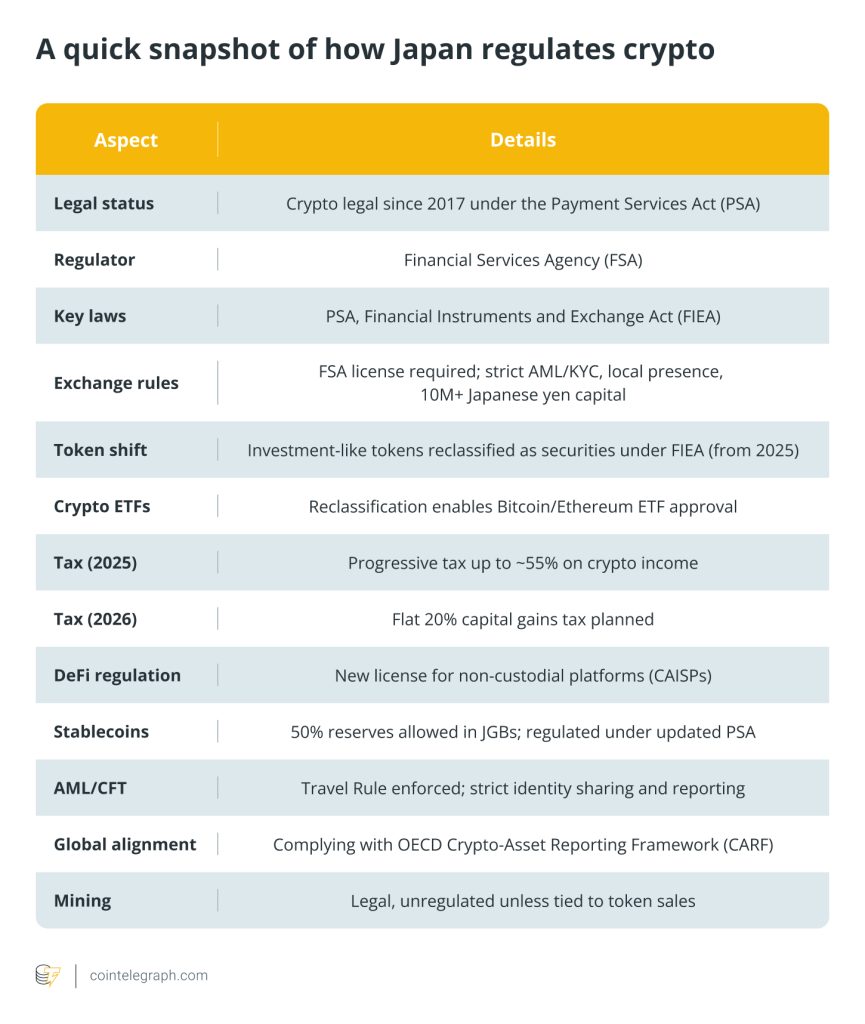
Japan is often a useful indicator of what’s to come, and recent tax debates there are worth watching closely. (Japan has proposed a flat tax of 20% on crypto winnings)
Brišov: Another potential spark is prediction markets, like Polymarket and similar platforms. They are still largely unregulated, with no clear court cases or legislative frameworks. However, they could become a more significant trend in 2026.
Another big trend will probably be the emergence of so-called super apps.
Read also
Features
‘Raider’ Investors Plunder DAOs — Nouns and Aragon Share Lessons Learned
Features
Billions and billions: How brands are bringing Blockchain from the niche to the mainstream
These applications would combine multiple functions such as prediction markets, commodity trading, on-ramps and off-ramps, exchanges, memecoins and real-world asset tokenization. They can also integrate AI agents and potentially autonomous AI actors.
Regulators and lawmakers will have to adapt, much like they did during the early days of major social media platforms. We still do not fully understand how to regulate these structures.
To: I would like to see more progress in the areas of privacy, cyber security and crypto. What I have noticed is that existing privacy laws, such as GDPR, do not adequately consider decentralized systems. When the GDPR was being negotiated around 2012 to 2013, cloud computing was a primary focus. Applying those frameworks to crypto today often results in glitches or inconsistencies.
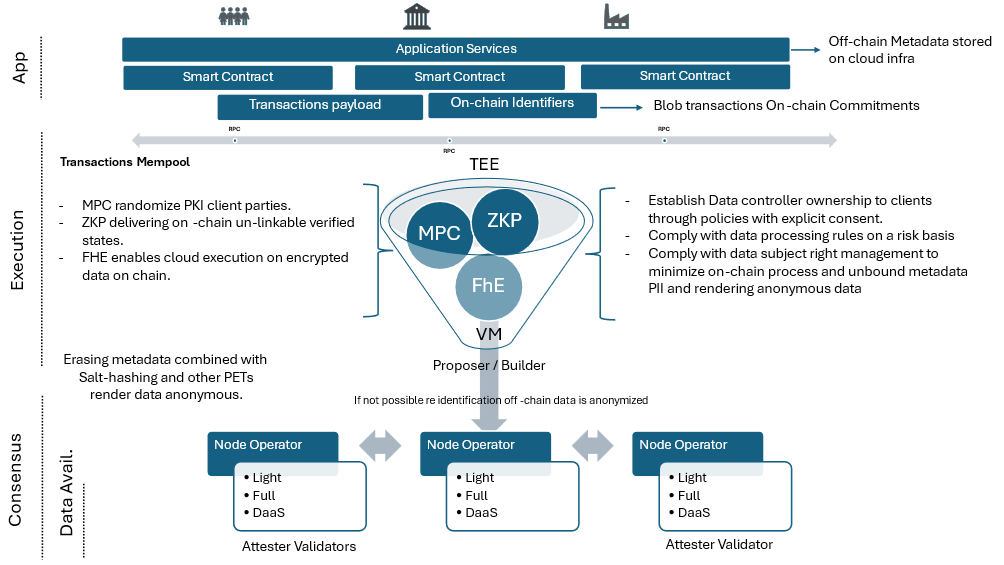
I would like to see either adjustments to existing laws or clearer regulatory interpretations explaining how these rules apply to cryptocurrencies. There is an increased focus on developments in the privacy-focused space, and I hope that legal frameworks will begin to reflect that reality.
Magazine: From a privacy law perspective, how do you view privacy tokens and their reputation?
To: I’m not sure there will necessarily be new regulations specifically targeting privacy tokens. What I expect is more clarity around their use cases.
Like any tool, privacy-enhancing technologies can be used for legitimate and illegitimate purposes. Banning the tool itself is, in my opinion, short-sighted.
Public blockchains are designed to be transparent, but that doesn’t mean that individuals want all of their transactions to be visible to the entire world. There is a need for selective disclosure. This is where technologies such as verifiable credentials can play a role by allowing regulators access to necessary information while preserving individual privacy.
There is probably a middle ground. Although I am not a technologist, I know that many people are actively working on solutions that balance regulatory oversight and privacy.
Subscribe
The most compelling reads in blockchain. Delivery once a week.


Yohan Yun
Yohan Yun is a multimedia journalist who has been covering blockchain since 2017. He worked at crypto media house Forkast as an editor and covered Asian technology stories as a contributing reporter for Bloomberg BNA and Forbes. He spends his free time cooking and experimenting with new recipes.