The US House of Representatives and Senate have reached an agreement to move forward with a housing bill that includes a ban on the Federal Reserve from creating a central bank digital currency (CBDC) until 2030.
Bipartisan group of leaders of the House of Representatives and the Senate released an updated version of the 21st Century Housing Pathway Act on Tuesday, which aims to address housing affordability and ban institutional investors from buying existing single-family rental homes.
The bill includes a ban on CBDCs since it was passed by the Senate in March. The House of Representatives also passed its version of the bill with strong support in May, but the House and Senate disagreed on some aspects. The Senate has now added further amendments that will be brought before the House for a final vote.
The bill is likely to pass quickly and would be a victory for Republicans who have been trying to pass a CBDC ban for years, as earlier stand-alone bills have stalled in Congress. Crypto advocates have long criticized CBDCs, which they see as an attempt by governments to repurpose crypto technology into a centrally controlled asset.
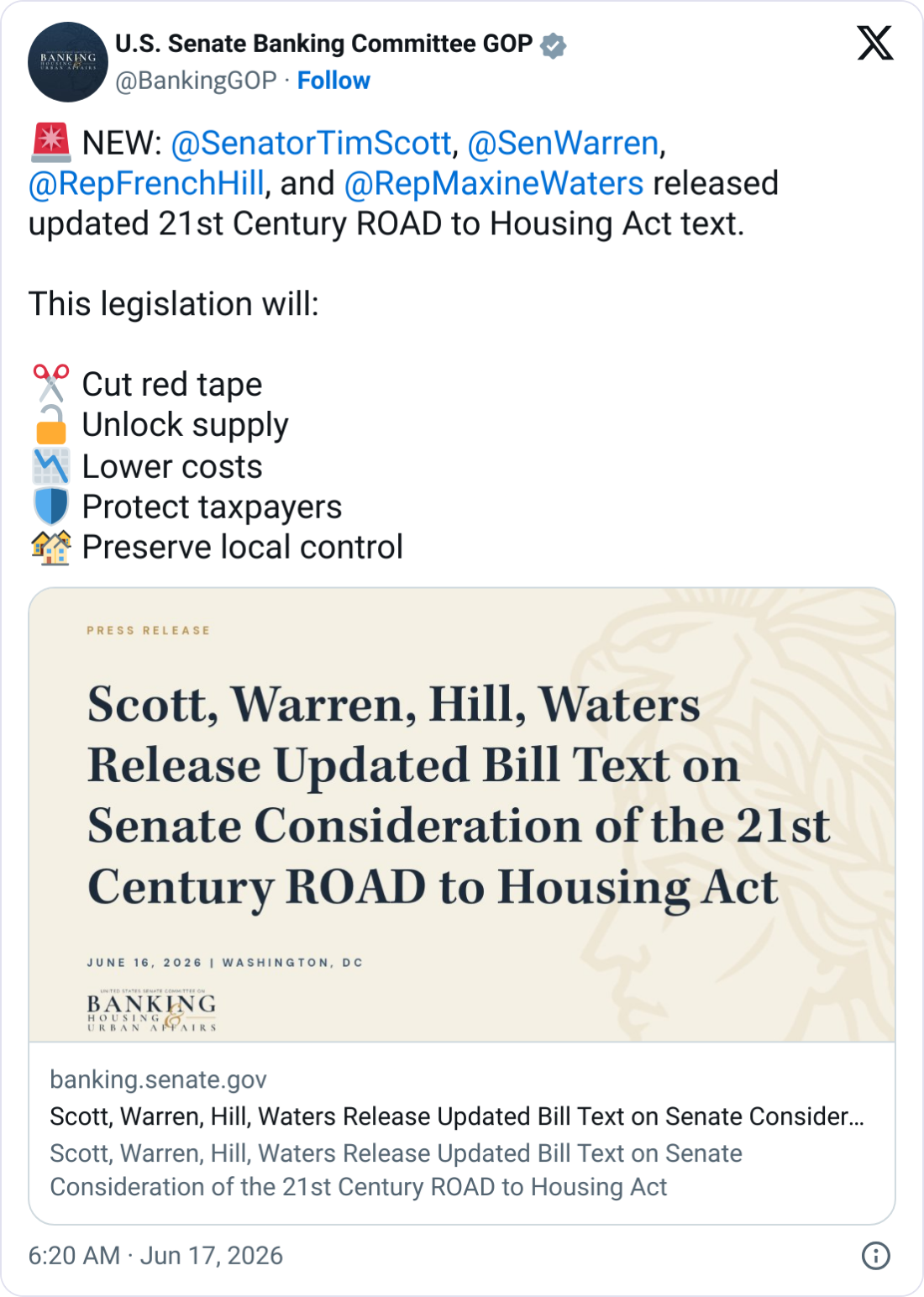
Source: US Senate GOP Banking Committee
The deal also means Congress can focus on passing other legislation before the August recess and midterm elections in November, particularly the CLARITY Act regulating cryptocurrencies that many lawmakers have championed.
House Republican leaders plan to bring the bill up for a vote after the House returns from recess on June 23, two people familiar with the plan said told Politically.
The housing bill includes text that says the Federal Reserve may not, directly or indirectly, “issue or create a central bank digital currency or any digital asset that is substantially similar to a central bank digital currency.”
Related: South Carolina Governor Signs Bill Protecting Bitcoin Miners, Banning CBDC
It adds that the clause will expire on December 31, 2030, and creates an exemption for crypto stablecoins or “dollar-denominated currency that is open, permissionless and private.”
The clause revives much of the text from Republican Rep. Tom Emmer’s Anti-CBDC Oversight Act, which was introduced in June 2025, passed the House the following month, but never passed the Senate.
US President Donald Trump signed executive order in January 2025 banning federal agencies from all work related to CBDCs, stating that they threaten “the stability of the financial system, individual privacy, and the sovereignty of the United States.”
Magazine: How Crypto Laws Changed in 2025 — and How They Will Change in 2026