
The risk-adjusted yield profile of Bitcoin (BTC) is approaching levels historically aligned with long-term accumulation zones. The Sharpe ratio, a metric that measures return against volatility, fell to -20, the threshold that has marked Bitcoin’s big bottoms in every bear market since 2015.
At the same time, BTC foreign exchange reserves have fallen by approximately 80,000 BTC since February, while demand from accumulator addresses has more than doubled to 240,000 BTC from 115,000 BTC during the first two weeks of June.
BTC’s Sharpe ratio is back in the historical low zone
Bitcoin’s Sharpe Ratio reached -20 on June 11, a level that coincided with cycle lows over the past decade. The metric first fell below the threshold on January 5, 2015 and remained there until June 12, when BTC established a permanent bottom and entered a recovery phase.
A similar pattern emerged between December 8, 2018 and March 7, 2019, when the Sharpe ratio spent most of the three months below -20 during the bottom of the Bitcoin bear market. The metric repeated the signal from October 7, 2022 to January 7, 2023, shortly before BTC began its next sustained period of growth.
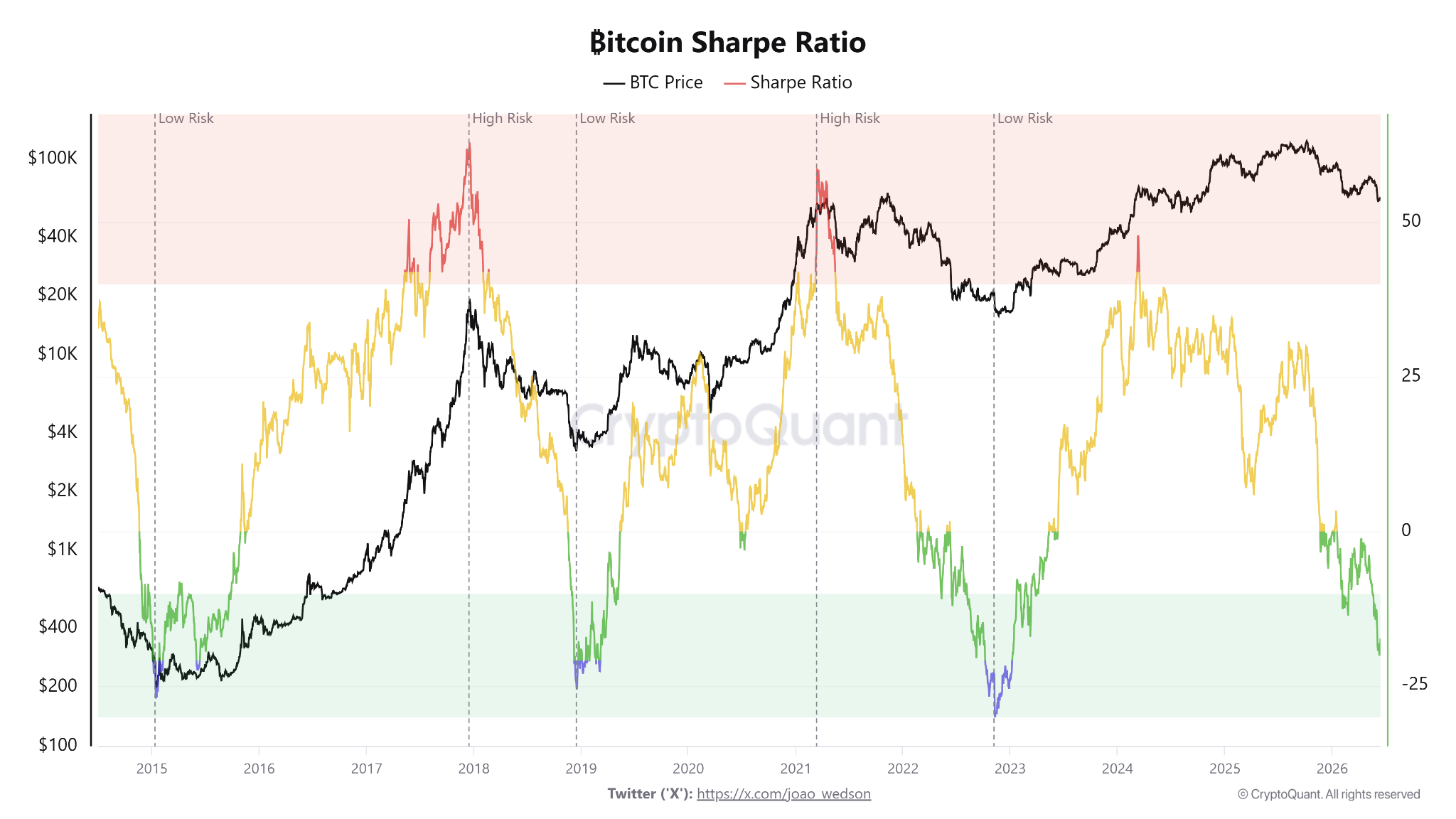
Bitcoin Sharpe Ratio. Source: CryptoQuant
While neither metric identifies market bottoms with precision, periods below -20 tend to coincide with extended periods of accumulation for BTC.
Onchain data points in the same direction. Bitcoin held on exchanges fell to 2.71 million on Monday from 2.79 million BTC in February. The exchange’s BTC reserves briefly rebounded to 2.73 million BTC from a yearly low of 2.65 million BTC between late April and early June, although balances have since fallen by around 12,000 BTC over the past two weeks.
In the same period, the demand for accumulator addresses strengthened. Cohort absorbed 125,000 BTC between June 1st and June 14th. This indicates a growing interest among wallets that have a history of holding rather than distributing coins.
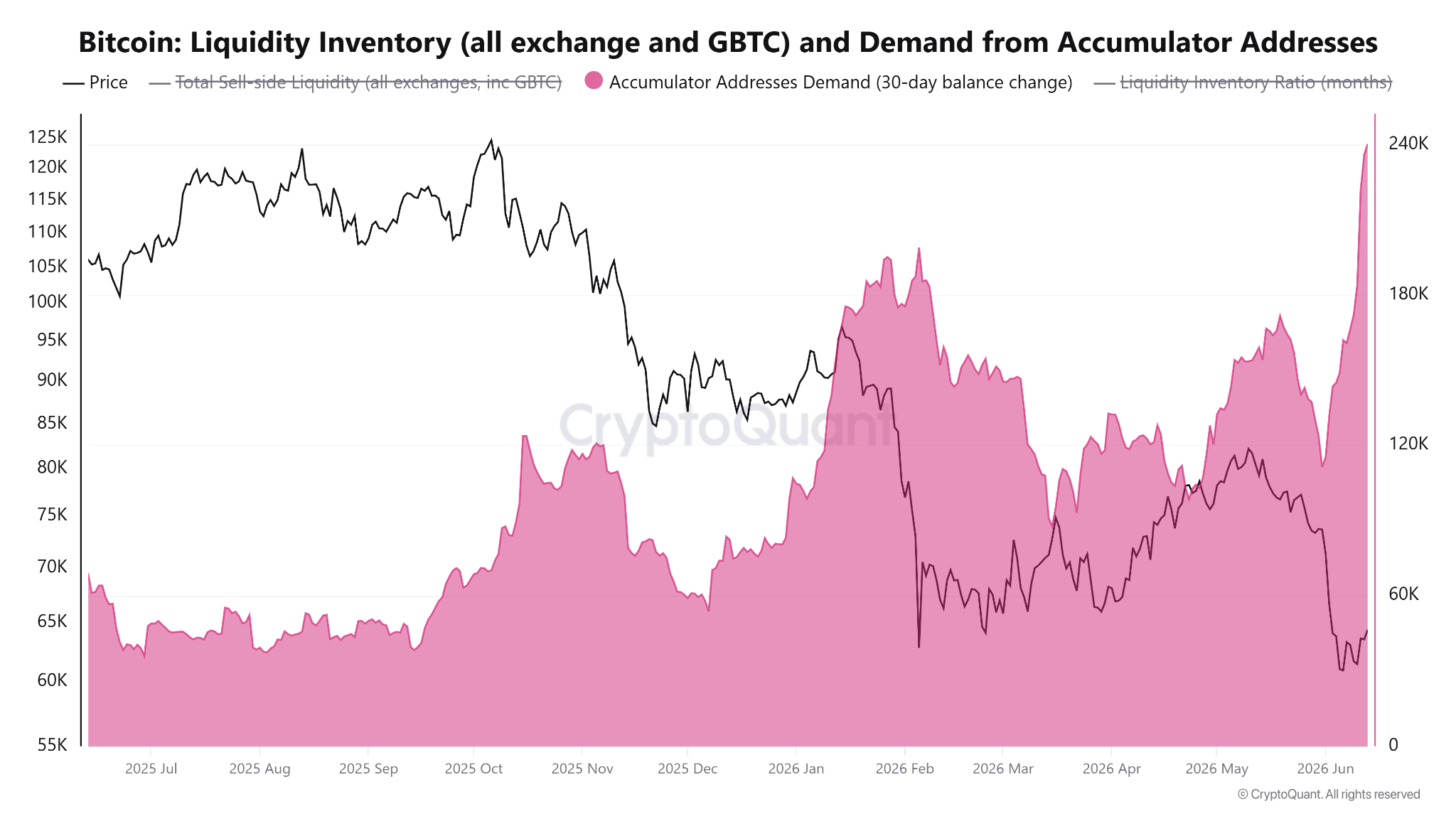
BTC demand from accumulator addresses. Source: CryptoQuant
Related: Bitcoin’s ‘Quiet Top’ Challenges Most Estimates of Market Bottom: Research
Bitcoin’s consolidation below the key weekly trend line continues to develop
Bitcoin has spent 133 consecutive days below its 100-week simple moving average (SMA), a long-term trend indicator that currently sits near $88,466.
Market cycle data shows that Bitcoin often trades below the 100-week SMA for extended periods before recovering it. After the 2013 market peak, BTC spent 378 days below the trendline while consolidating between $200 and $400. During the 2018-2019 bear market, BTC stayed below the 100-week SMA for 175 days and traded between $3,000 and $6,000.
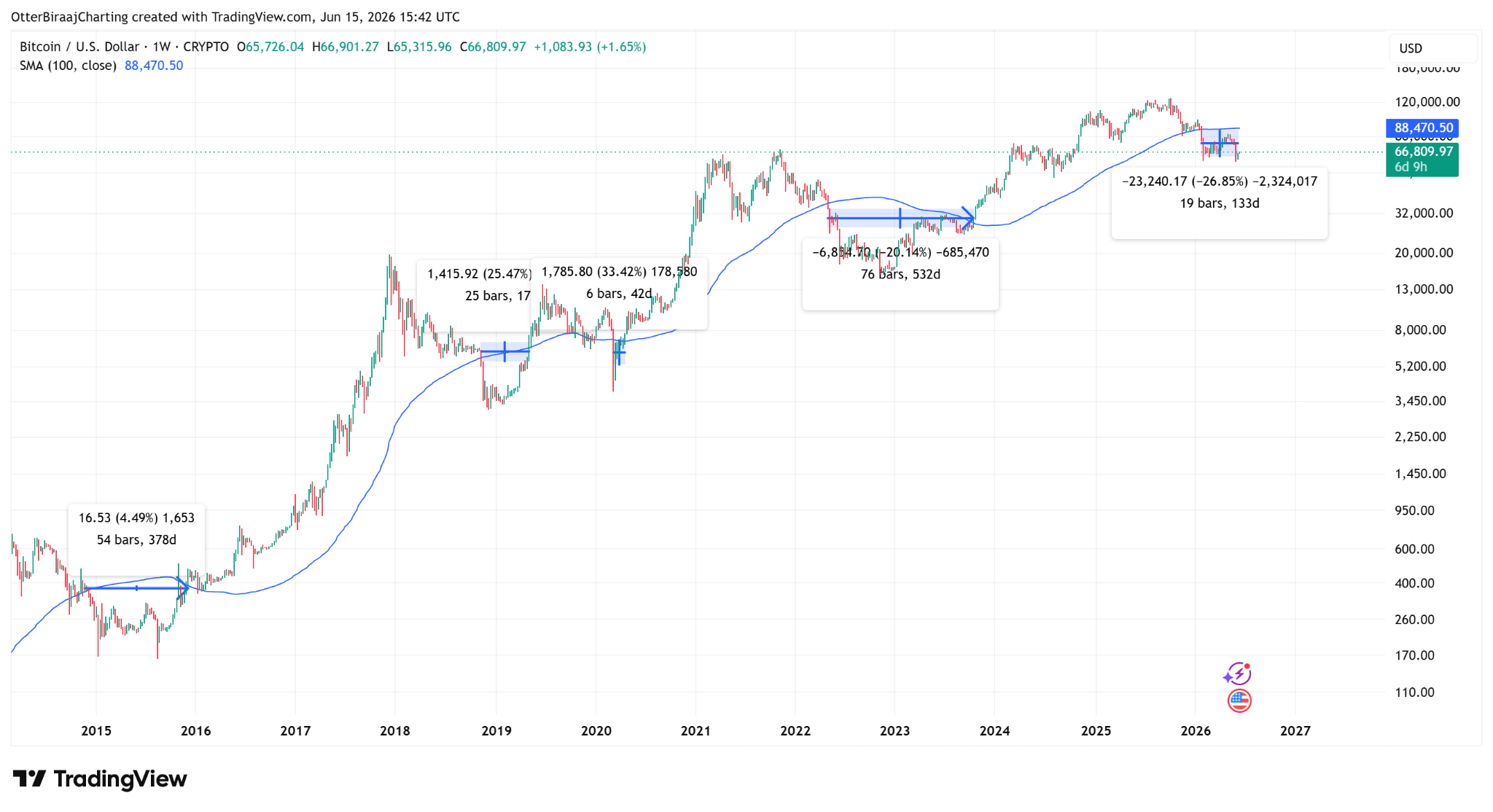
BTC price and 100 period SMA trend analysis. Source: Cointelegraph/TradingView
The longest period occurred after the market crash of 2022. Bitcoin remained below the 100-week SMA for 532 days while trading between $16,000 and $25,000.
Over those three cycles, Bitcoin spent an average of approximately 362 days below the indicator before recovering it and establishing a sustained uptrend. Each period was characterized by prolonged accumulation rather than immediate recovery.
With 133 days already recorded below the 100-week SMA, the current cycle is still well below the historical average. Previous examples show that consolidation phases below the trendline often last for several months before Bitcoin recovers.
Related: Bitcoin Analysis Warns Of BTC Price Rejection As It Approaches $67K